Visit Vyaparify Site: https://h-id.vyaparify.com/kheti
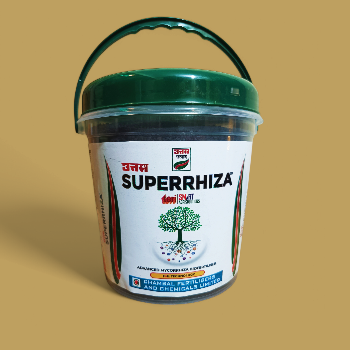
Harnessing the Power of Mycorrhiza: A Farmer's Journey to Bountiful Harvests
In the heart of rural India, where agriculture is not just a livelihood but a way of life, farmers like Ramesh Kumar toil day and night to nurture the land. Ramesh, a seasoned farmer from Maharashtra, faced a critical challenge that many Indian farmers know all too well declining soil fertility and its impact on crop yields. This is where mycorrhiza, a silent ally in agriculture, stepped in to transform Ramesh’s farming woes into a story of success.
Ramesh's farm, a sprawling expanse of lush green fields, was once the pride of his family. However, over the years, he noticed a disturbing trend. Despite using fertilizers and following traditional farming practices, his yields were diminishing. The soil, once rich and fertile, seemed exhausted and unresponsive. The impact on his livelihood was severe, and the anxiety of supporting his family grew with each passing season.
Enter mycorrhiza, a natural solution that changed everything for Ramesh. Mycorrhiza, a symbiotic association between fungi and plant roots, works wonders by enhancing nutrient uptake from the soil. When Ramesh first heard about it from a fellow farmer, he was skeptical. How could fungi, invisible to the naked eye, possibly rejuvenate his tired soil? Yet, desperate for a solution, he decided to give it a try.
Ramesh started small, applying mycorrhiza to a portion of his farm. The results were nothing short of miraculous. Within weeks, he noticed a visible difference. His plants appeared healthier, with vibrant green leaves and sturdy stems. The soil, once dry and lifeless, seemed to regain its vigor. Encouraged by this transformation, Ramesh expanded the use of mycorrhiza to his entire farm.
The major problem that mycorrhiza solved for Ramesh was the poor soil health that plagued his crops. By forming a network around the plant roots, mycorrhiza increased the surface area for absorption, allowing the plants to access water and nutrients more efficiently. This not only boosted plant growth but also made the crops more resilient to drought and disease. Ramesh’s farm was thriving once again, and so was his spirit.
But Ramesh was not alone in this journey. Across the country, farmers like Priya in Karnataka and Arvind in Punjab have shared similar stories of success. Priya, who grows a variety of vegetables, struggled with pest infestations and low yields. After integrating mycorrhiza into her farming routine, she saw a significant improvement in plant health, reducing her need for chemical pesticides. Arvind, a wheat farmer, experienced a 30% increase in yield, which he attributed to the improved soil structure and nutrient availability that mycorrhiza provided.
The emotional relief that mycorrhiza brought to these farmers cannot be understated. Beyond the practical benefits, it restored their faith in farming and the promise of a better future. The peace of mind knowing that their hard work would indeed bear fruit was invaluable.
From an SEO perspective, it’s crucial to understand the broader implications of using mycorrhiza. This natural soil enhancer, rooted in sustainability, aligns with the growing demand for eco-friendly farming practices. As consumers become more conscious of how their food is grown, the use of mycorrhiza positions farmers to meet market demands for sustainable and organic produce.
In conclusion, mycorrhiza is more than just a product; it is a catalyst for change in the agricultural landscape of India. For farmers like Ramesh, Priya, and Arvind, it represents hope and a renewed connection to the land. As we look to the future, embracing such natural solutions could be key to solving some of the most pressing challenges faced by the farming community. By harnessing the power of mycorrhiza, farmers can ensure that their fields remain fertile for generations to come, securing not just their livelihoods but also the food security of the nation.
Visit Vyaparify Site: https://h-id.vyaparify.com/kheti
Visit Vyaparify Site: https://h-id.vyaparify.com/kheti


 Select Date
 08:00 AM - 08:30 AM, Thursday, Nov 24, 2024
 Indian Standard Time
 Shahanab
Comments (0)