Visit Vyaparify Site: https://h-id.vyaparify.com/kheti
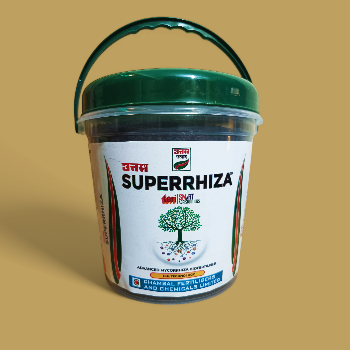
Unleashing Nature’s Power: How Mycorrhiza Transformed Ramesh’s Farm
In the heart of India, where the golden sun kisses fertile lands, lies the village of Sehore in Madhya Pradesh. Ramesh, a seasoned farmer, has spent decades toiling on his ancestral farm, cultivating crops that sustain not just his family but the entire village. However, Ramesh faced a persistent challenge that shadowed his dreams—a decline in crop yield.
For years, Ramesh had been battling decreasing soil fertility. Despite his best efforts, the soil seemed exhausted, unable to support the thriving crops it once did. It was as if the very earth had lost its spirit. This was more than just a practical problem; it was an emotional burden. Farming was Ramesh's heritage, his identity. Watching his land lose its vitality was heart-wrenching.
One day, while attending a local agricultural seminar, Ramesh heard about a revolutionary solution mycorrhiza. He learned that mycorrhiza is a type of beneficial fungi that forms a symbiotic relationship with plant roots, enhancing nutrient uptake and improving soil health. Intrigued, Ramesh decided to give it a try, hoping it could revive his land and his spirits.
Ramesh started applying mycorrhiza to his fields. The results were nothing short of miraculous. Within a few months, he noticed a significant improvement in his crops. The plants looked healthier, greener, and more robust. The roots were stronger, and the soil was visibly more fertile. Mycorrhiza had breathed new life into his land.
The major problem Ramesh faced—decreasing soil fertility—was effectively addressed by mycorrhiza. This natural solution not only enhanced the nutrient absorption of his plants but also improved the soil structure, making it more conducive for growth. His crop yield increased, and with it, his confidence and hope for the future.
Ramesh’s story is not unique. Across India, many farmers have struggled with soil degradation, a problem exacerbated by over-reliance on chemical fertilizers and unsustainable farming practices. Mycorrhiza offers a sustainable, eco-friendly solution that not only addresses the practical problem of soil fertility but also restores the farmer's emotional connection with the land.
Consider Sita, a farmer from Punjab, who faced similar issues on her farm. For years, she watched her once-flourishing fields decline. After switching to mycorrhiza, Sita saw her crops flourish once again, improving her livelihood and renewing her family’s hope for a prosperous future.
The benefits of mycorrhiza extend beyond individual farms. By improving soil health, it supports biodiversity, reduces the need for chemical fertilizers, and promotes sustainable agriculture practices. This means healthier produce for consumers and a healthier planet for future generations.
If you are a farmer like Ramesh or Sita, struggling with soil fertility and declining crop yields, mycorrhiza might be the transformative solution you need. It’s not just about increasing your yield; it’s about nurturing the land and revitalizing your legacy.
Incorporating mycorrhiza into your farming routine can reshape the future of your fields, your family, and the entire farming community. Embrace this natural partner to unleash the full potential of your land. Let mycorrhiza take you back to the roots of sustainable, prosperous farming.
As Ramesh stands in his lush fields today, he’s not just a farmer; he’s a steward of the earth, nurturing it to its fullest potential. Mycorrhiza has not only solved his problem but also strengthened his bond with the land—a bond that will endure for generations.
SEO Tips Incorporated
- The blog uses keywords like "mycorrhiza," "soil fertility," "crop yield," "sustainable agriculture," and "Indian farmer" to optimize searchability.
- A storytelling approach engages readers, increasing time spent on the page, which can positively affect search rankings.
- Real-life examples and case studies enhance credibility and relatability, encouraging social sharing and backlinks.
Visit Vyaparify Site: https://h-id.vyaparify.com/kheti
Visit Vyaparify Site: https://h-id.vyaparify.com/kheti


 Select Date
 08:00 AM - 08:30 AM, Thursday, Nov 24, 2024
 Indian Standard Time
 Shahanab
Comments (0)