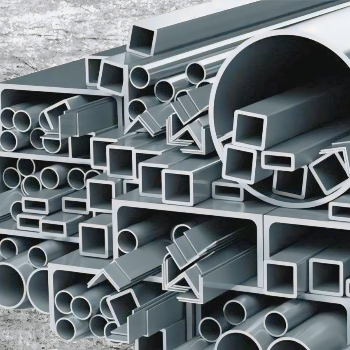
Premium Aluminium Extrusions High-Strength Profiles
Aluminum extrusions are profiles created by forcing aluminum alloy through a shaped die, forming continuous sections with specific cross-sectional shapes. This process enhances aluminum’s strength while maintaining its lightweight and corrosion-resistant properties. Extrusions are widely used in construction, automotive, aerospace, and industrial applications, offering versatility in design, durability, and recyclability. They come in various shapes, including angles, channels, tubes, and custom profiles, catering to diverse structural and aesthetic needs.
₹268
Product Details
These premium aluminium extrusions are precision-engineered profiles created by forcing aluminium alloy through a high-quality die to achieve accurate, repeatable cross-sectional shapes. Designed for engineers, fabricators, contractors and OEMs, they offer an exceptional strength-to-weight ratio, corrosion resistance and excellent dimensional stability for demanding structural applications across many sectors. Available in angles, channels, tubes and custom profiles, they suit construction, automotive, aerospace and industrial projects that demand both performance and clean, modern aesthetics. Easy to machine, drill and finish, they support efficient assembly and long service life in varied environments. Their recyclability makes them a sustainable choice for modern designs and eco-focused builds. Products are supplied from 10-175/23 OPP. BHAVESH BEARING CORP, FATHENAGAR MAIN ROAD, Telangana, 500018.
Features & Benefits
High strength-to-weight ratio for efficient structural performance
Excellent corrosion resistance for long outdoor service life
Available in standard and fully custom profile shapes
Easy to cut, machine, drill and assemble
Smooth finish suitable for anodizing and powder coating
Fully recyclable material supports sustainable engineering
Excellent corrosion resistance for long outdoor service life
Available in standard and fully custom profile shapes
Easy to cut, machine, drill and assemble
Smooth finish suitable for anodizing and powder coating
Fully recyclable material supports sustainable engineering
How to Use
Measure and mark required profile lengths accurately. Cut aluminium extrusions using a suitable saw with metal-cutting blade. Deburr edges and drill holes where needed. Dry-fit components to verify alignment. Join using brackets, fasteners, welding or riveting as per design. Apply surface finishing like anodizing or powder coating if required. Inspect assembly before full load use.
Aluminium extrusions are used for structural frames, doors and windows, machine guards, conveyor systems, modular workstations, heat sinks, automotive parts and architectural elements. Their strength, light weight and corrosion resistance make them ideal for construction, industrial equipment, transportation and aerospace applications where precise, repeatable profiles are required.
Yes, aluminium extrusions offer an excellent strength-to-weight ratio, making them suitable for many structural uses when correctly designed. With the right alloy, wall thickness and profile design, they can support significant loads. They are widely used in building facades, frameworks, platforms and machinery where reduced weight and durability are important.
Aluminium extrusions can be fully customized by creating a specific die that matches your required cross-sectional profile. This allows you to design channels, slots, fins and internal cavities tailored to your application. After extrusion, lengths, holes and surface finishes can also be customized to meet precise project specifications.
To choose the right aluminium extrusion, define the application, load conditions and environment. Consider alloy grade, wall thickness, size and profile geometry needed for strength and connection points. Check whether standard angles, channels or tubes meet your requirements before opting for custom extrusions, and consult engineering data where necessary.
Aluminium extrusions naturally form a protective oxide layer, giving good corrosion resistance in many environments. Their durability can be further improved with anodizing or powder coating. This makes them suitable for outdoor, industrial and marine-adjacent applications, providing long service life with minimal maintenance compared to many untreated ferrous materials.


 Select Date
 08:00 AM - 08:30 AM, Thursday, Nov 24, 2024
 Indian Standard Time
 Shahanab