
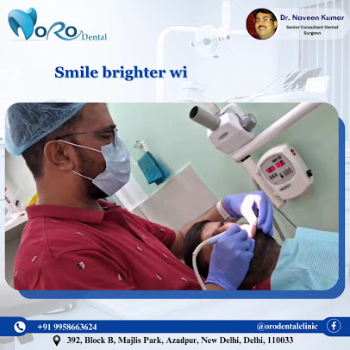
"See your dentist every six months" is advice most people have heard since childhood, repeated so often it barely registers anymore. But few people actually know why that number exists, or whether it genuinely applies to their own mouth. The honest answer is that six months is a reasonable default for most people — but the right interval really depends on your specific oral health, habits, and history, not a fixed rule that applies equally to everyone.
Why Six Months Became the Standard
Plaque is constantly forming on your teeth, even with regular brushing and flossing. Over time, plaque that isn't removed hardens into tartar, which brushing alone can no longer clear — it needs professional scaling. A six-month gap between visits is generally enough time for small, early-stage problems to develop without becoming serious: a tiny cavity that hasn't reached the nerve yet, gum inflammation before it turns into full periodontal disease, or a hairline crack that hasn't started causing pain. Catching these early is the entire point of a routine visit — not just cleaning, but early detection.
The six-month number isn't arbitrary either. It's roughly how long it takes for plaque buildup and minor issues to progress from "barely noticeable" to "starting to cause real problems" in an average mouth with reasonable home care. For some people, that timeline is longer. For others, it's considerably shorter.
When You Might Need to Go More Often
A fixed six-month rule doesn't work equally well for everyone. You may need more frequent visits — every three to four months — if any of the following apply:
- You have a history of cavities or have needed multiple fillings in the past; your mouth may simply be more prone to decay
- You're currently dealing with gum disease or have had it before, since periodontal issues need closer monitoring to prevent recurrence
- You wear braces or clear aligners, where more frequent visits help track both tooth movement and catch any fitting or hygiene issues around brackets or trays early
- You smoke, or have a condition like diabetes that's known to affect gum health and healing
- You've recently had a filling, crown, root canal, or other dental work that needs a follow-up to confirm it's healing and functioning properly
- You tend to get tartar buildup quickly regardless of how well you brush, which some people are simply more prone to due to saliva composition and diet
On the other end, some patients with excellent oral hygiene, no history of dental problems, and healthy gums might be fine stretching to eight or nine months between visits — though this is a conversation to have directly with your dentist rather than deciding on your own.
What Actually Happens During a Checkup
A routine checkup at Oro Dental Clinic in Adarsh Nagar, Delhi, isn't just a quick look and a cleaning. It typically includes:
- A full oral health assessment — checking teeth, gums, bite alignment, and looking for early signs of decay or wear
- Professional scaling to remove plaque and tartar buildup that's hardened beyond what a toothbrush can reach, particularly along the gumline and between teeth
- A conversation about any symptoms you've noticed, however minor — sensitivity, occasional pain, bleeding gums when flossing
- If anything concerning comes up during the visual exam, a digital X-ray can reveal what's happening below the surface — cavities forming between teeth, issues near the tooth roots, or bone loss that isn't visible during a standard exam
This combination of visual, physical, and imaging-based assessment is what makes a professional checkup meaningfully different from just brushing carefully at home.
The Cost of Skipping Checkups
The financial argument for regular checkups is often more convincing than the health one, if only because it's easier to picture. A cavity caught early is usually a simple, inexpensive filling — a short procedure with no complications. That same cavity, left untreated for a year or two because a checkup got postponed, can progress to the point where the nerve becomes infected, requiring a root canal — a longer, more involved, and considerably more expensive procedure. In more extreme cases, a tooth that could have been saved with an early filling ends up needing extraction entirely.
Regular checkups are, in a very literal sense, one of the cheapest forms of dental care available — because their entire purpose is preventing the need for more expensive treatment later.
Book a Checkup
📍 Adarsh Nagar, Delhi
📞 Message us on WhatsApp to schedule your dental checkup and cleaning


 Select Date
Comments (0)