In a bustling neighborhood of Chennai, Anjali was preparing for one of the most significant events of her life—her wedding. As she sifted through the myriad of jewelry options, a feeling of nostalgia swept over her. Anjali recalled her grandmother’s stories of how each piece of jewelry carried a story, a memory, a legacy. To honor such traditions while adding a touch of her unique style was the challenge she faced.
Anjali is not alone in this quest. Many brides across India, like her, find themselves torn between the rich traditional jewelry that represents their heritage and the sleek, contemporary designs that reflect their personal taste. The long haram, a staple in South Indian bridal jewelry, is often the centerpiece of this dilemma. It symbolizes prosperity, elegance, and the continuity of family traditions. Yet, finding a haram that encapsulates both tradition and modernity is no small feat.
Anjali’s journey began with a visit to her family jeweler, where she hoped to find a piece that would capture her heart. The collection was vast, yet something was missing. The traditional harams were exquisite but felt too heavy for her taste. On the other hand, the modern designs lacked the cultural depth she yearned for. Anjali felt a pang of disappointment, worried she might have to settle for a compromise.
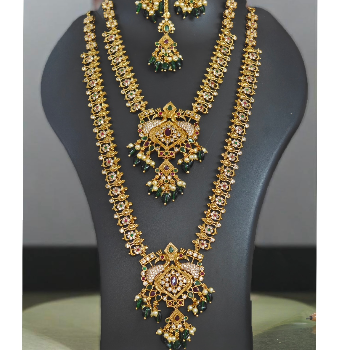
Determined to find a solution, Anjali turned to her friend Kavya, who recently faced a similar predicament. Kavya recommended exploring online stores that specialized in curated jewelry pieces. It was through this digital exploration that Anjali stumbled upon an exquisite long haram that promised the perfect blend she had been seeking.
The haram was a piece of art—crafted with meticulous attention to detail, featuring traditional motifs with a contemporary twist. It was made of lustrous gold with intricate carvings of lotus and peacocks, reminiscent of the temple jewelry that had adorned the women in her family for generations. Yet, its design was sleek and modern, making it versatile enough to be worn on various occasions beyond her wedding day.
The emotional resonance of this discovery was profound. Anjali realized that this piece did not just complete her bridal ensemble; it told her story. It was a testament to her roots and her individuality, a bridge between the past and the present. Wearing it on her wedding day, Anjali felt connected to her ancestors, enveloped in their blessings as she embarked on a new journey.
This experience is a testament to how the right jewelry can solve an emotional dilemma, offering not just aesthetic satisfaction but also a sense of fulfillment and continuity. For brides like Anjali, the long haram is more than an accessory—it is a symbol of identity, a keeper of traditions, and a reflection of personal style.
In today’s fast-paced world, where the lines between tradition and modernity often blur, finding a balance is crucial. As Anjali’s story illustrates, the right piece of jewelry can serve as a harmonious blend of both worlds, allowing for personal expression while honoring heritage.
For those embarking on a similar quest, remember that your long haram should resonate with who you are. Explore options, seek recommendations, and most importantly, choose a piece that tells your story. After all, jewelry is not just an adornment; it is a legacy.
In conclusion, Anjali’s journey to find her perfect long haram is a narrative that resonates with many. It’s a reminder that while trends may come and go, the emotional connection and stories behind each piece of jewelry remain timeless. So, whether you are a bride-to-be or someone looking to cherish a piece of tradition, let your jewelry be a reflection of your story—one that you will treasure for a lifetime.
Visit Vyaparify Site: https://h-id.vyaparify.com/reddy-vanitha

 Select Date
 08:00 AM - 08:30 AM, Thursday, Nov 24, 2024
 Indian Standard Time
 Shahanab